Journal
Choosing a wedding date by season, not by trend
Trends pick months by photograph. Seasons pick them by physics: light, temperature, rain and what the land is doing. The second method wins.
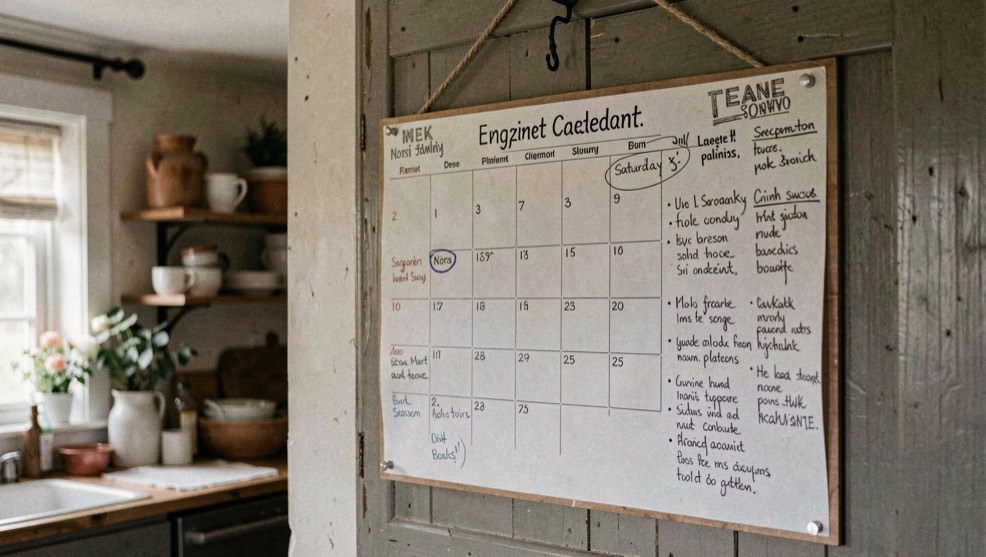
Before any vendor is booked, before any budget line exists, a couple makes the decision that quietly sets all the others: the date. The month chooses the hour of sunset, the odds of rain, the flowers in local season, the price of the venue and the availability of everyone else. Yet dates are often chosen in an evening, by anniversary arithmetic or by whatever month photographs well online this year. Choosing by season instead is slower by a weekend and better by every measure that follows.
Start from the light, not the landscape
The engine of an outdoor wedding is daylight, and daylight is seasonal property. Summer gives long, forgiving evenings and harsh middays; fall gives the low amber light photographers chase and an early, unforgiving sunset; spring gives soft, shifting skies; winter gives a day short enough that the whole wedding can happen in darkness by design, candles and lamps carrying the room. The first question is not which month is prettiest but which light suits the wedding you are actually planning, an afternoon lawn ceremony or a candlelit dinner. The arithmetic that anchors the ceremony hour to the sun is worked through in golden hour wedding photos.
What each season gives and takes
- Late spring: fresh gardens and long greens against real rain and mud risk, the full tradeoff in spring decor planning.
- Summer: certainty of warmth against heat, shade logistics and the busiest vendor calendar of the year.
- Fall: the palette and the light against early dark, cold evenings and the most contested Saturdays at barns.
- Winter: intimacy, price and candlelight against weather travel risk and an outdoor ceremony off the table.
None of these verdicts is a warning, each is a design brief. The seasonal consequences for decor specifically are written month by month in decor by season, and the questions each month adds to a venue tour are the core of the seasonal venue checklist.
Money follows the calendar
The same barn, the same caterer and the same florist price differently across the year, and the differences are structural: peak Saturdays carry premiums, off-season months open discounts and availability, and midweek or Sunday dates move everything from the venue to the rentals. Heat in March and shade in July are not free, so the honest comparison is season against season with its full costs, not venue fee against venue fee. The method for laying those numbers side by side is the budget breakdown framework, which treats the date as the first input rather than a footnote.
Availability is a season too
Peak season compresses every calendar: the venue you want, the photographer you want and the caterer you want may share exactly one free date, or none. Couples who choose the season first, then hunt the date inside it, meet this wall calmly and pick from real options; couples who fix a single date first discover that the wall chooses for them. If the property matters more than the month, ask the venue for their open dates before falling for a date that does not exist. The contract questions that follow are in the guide to questions to ask a wedding venue.
The trend trap
Every few years a month becomes fashionable, and its photographs circulate until every barn in the country is asked for the same twelve Saturdays. Trends are not wrong about beauty, they are wrong about your wedding: they know nothing of your guests' travel, your region's weather, your budget or the light your venue actually gets. A date chosen against the season's physics and your own facts ages better than any palette. What endures from a wedding is documented in the journal note on what guests actually remember, and no month on a mood board appears on that list.
A practical order for deciding
Here is the sequence that works: choose the season by light and feel, price two candidate months honestly against the budget framework, ask your shortlist of venues and photographers what those months hold, and only then circle a Saturday. The circle takes a minute. The research behind it is the first act of wedding planning done well, and everything downstream, decor, timeline, cost, inherits its calm.