Photography
Golden hour wedding photos: building the timeline
Golden hour is not a style of photograph, it is a window on a clock. Couples who treat it as an appointment get the pictures; couples who treat it as luck get the sun in the wrong place.
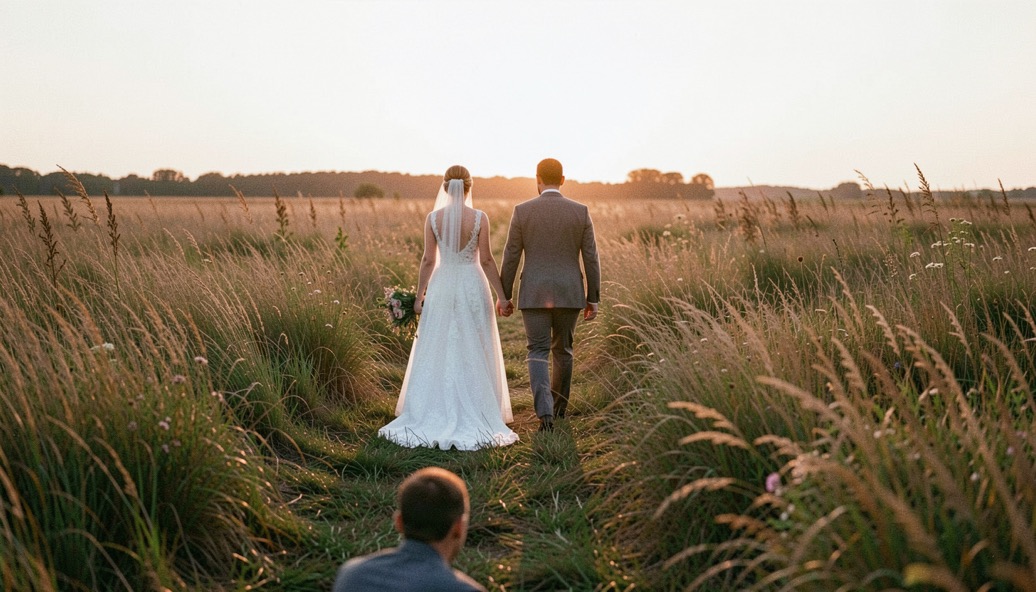
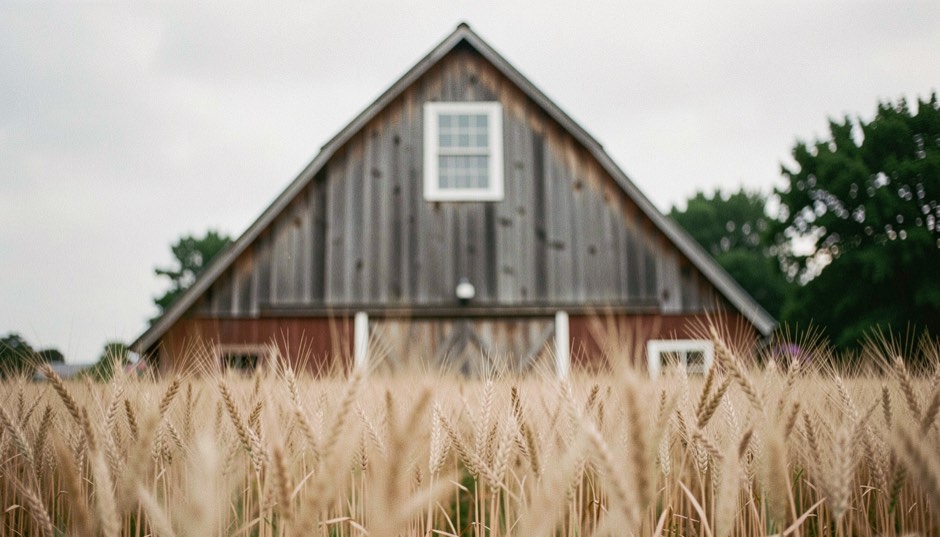
Ask a photographer what golden hour is and the honest answer is arithmetic: the last useful hour before sunset and the first after sunrise, when the sun is low, shadows lengthen and skin stops fighting the light. On a farm property that hour is the whole reason to marry outdoors, because pastures, barn siding and porch columns all turn warm at once. But the window moves with the date, shrinks or swells with the season and can be spent entirely on logistics if the timeline does not defend it. Defending it is planning, not luck.
Read the sun for your exact date
Golden hour is not fixed. In June it is generous but ends late, in October it is short and early, and it exists on a clock that changes every week. Two months before the wedding, look up sunset for the property and the exact date, then count backward: portraits want the final fifty minutes before sunset, the ceremony outdoors wants shade or low angle rather than overhead glare, and dinner indoors wants to start as the window closes. Property orientation matters as much as the hour, where the sun sets relative to the barn doors decides whether the aisle is backlit or squinting, and only a visit at the right hour answers it. The seasonal version of this reading is built into the seasonal venue checklist, month by month.
Anchor the ceremony hour to the light
The single most powerful schedule decision is the ceremony hour. Work it out backwards: if sunset is at half past seven, the last useful light ends near seven; portraits of the couple need forty to fifty minutes; family portraits need twenty; the ceremony runs thirty. That arithmetic puts the ceremony around five or half past five in fall, and an hour later in summer. Couples who choose the ceremony hour from vibes alone usually pick two hours too early in October, arriving at portrait time in darkness. The ceremony sequence itself is covered in the barn wedding checklist, which folds this hour into the whole booking order.
The three windows, named and defended
- Family window: immediately after the ceremony, twenty minutes, a printed list, one person from each side fetching.
- Couple window: the golden fifty minutes, away from the cocktail hour, phones left with someone else.
- Guest window: ten minutes at the reception's edge for the true candids, the photographer's favorite and most schedule-fragile.
Write the three windows into the shared timeline with names attached, and tell the caterer and the planner that the couple is unreachable during the second one. What gets defended on paper gets photographed; what gets improvised gets shortened.
Fallback light when the sky refuses
Overcast is not failure, clouds turn the whole sky into a soft studio, and properties with tree lines, porches and barn doors give photographers shade structures that August afternoons demand. The genuine hazards are the midday overhead sun of summer and the early dark of late fall, and both are answered the same way: move the ceremony later or earlier, and give the couple window a roof. How dim barn interiors are handled, candles, beams and all, is the subject of barn wedding photography in low light, which pairs naturally with this timeline.
Scout with the photographer, once
Before the wedding, ideally at the same hour on a similar date, walk the property with your photographer for thirty minutes. Choose the portrait spots in order, the fence line at golden hour, the porch for overcast, the doors for shade, and agree where the three windows happen. On the day, nobody is then searching for backgrounds with the clock running. The walk is also where you will see how the season dresses the property, which the decor by season gate describes from the design side.
What the pictures are for
Timeline discipline exists so the day does not eat the light, but the goal is not a portfolio, it is memory. Guests remember almost none of the schedule and almost all of the feeling, a truth worth rereading in the journal note on what wedding guests actually remember. Build the clock, then let the evening go where it wants inside it.