Photography
Barn wedding photography when the light is low
Barns steal light. The beams, the dark wood and the distance between bulbs produce rooms cameras misread, unless couples and photographers plan for it.
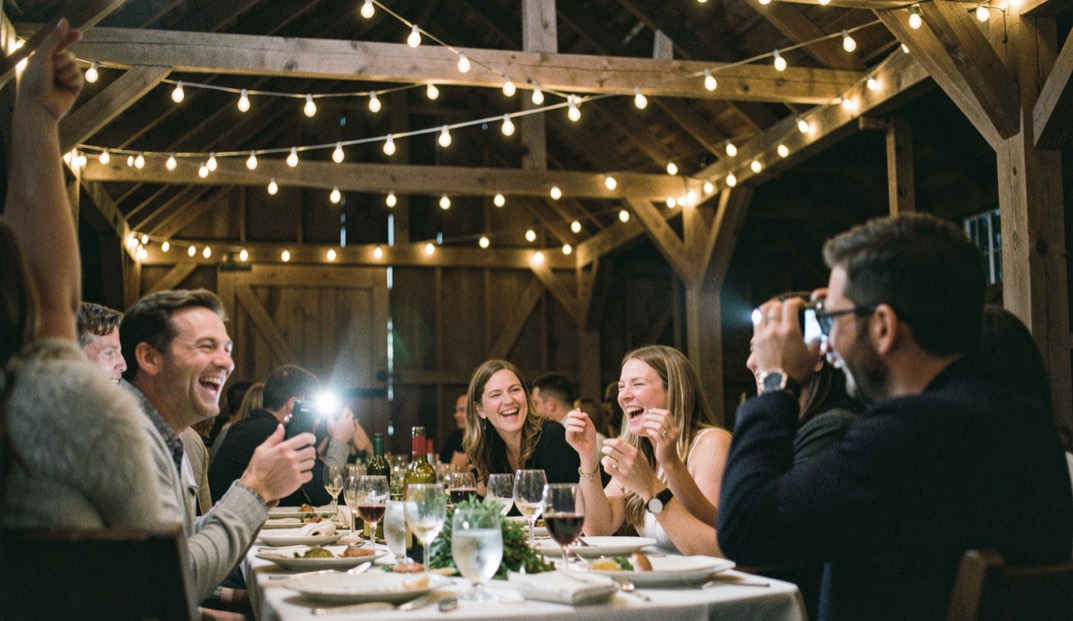
Every barn wedding produces the same two images: the bright postcard of the room at four in the afternoon and the warm, difficult room at eight in the evening, candles lit, bulbs strung, dance floor open. The second is the one couples actually want, glowing skin, visible beams, glasses raised in honest darkness, and the second is the hard one, because dark wood eats light and small lights turn faces into spots. Low-light barn photography is a craft with rules, and couples who understand the rules can help more than any equipment list.
What dim wood does to a picture
Cameras need light the way lungs need air, and a candlelit barn offers a fraction of what the eye happily accepts. Sensors respond in three ways, each with a cost: they lengthen the exposure, which blurs motion, the very motion of toasts and dancing you wanted; they raise sensitivity, which adds grain; they open the aperture, which narrows what stays in focus. Photographers juggle all three, and every element the couple controls, bulb warmth, wall color, distances, changes the juggle. A barn painted white inside behind the couple is not a style choice, it is a lighting instrument.
String lights: friend and foe
String lights are the signature of the barn reception and a trap for exposure. To a camera, a string of bare bulbs is a field of small suns, and metering on them darkens every face between them. The solutions are known: shoots-through diffusion, bulbs on dimmers, warm LEDs rather than filament at full power, and photographers who expose for skin and let the bulbs glow out. When you tour a barn, look at the lights as a system, where the strings run, whether they can dim, what they are attached to, and photograph a test frame with your phone at dusk: what your phone cannot hold, a professional will manage, but only with position and help. The timeline that gets couples to dusk with daylight to spare is in golden hour wedding photos.
Flash done honestly
- Bounced flash off rafters or a back wall, turning the structure into a soft sky: the workhorse of barn receptions.
- Off-camera flash in the corners of the dance floor, freezing motion without a paparazzi feel.
- Continuous warm light for first dances, romantic in person and gentle on cameras alike.
- What never works: the on-camera flash straight ahead, which flattens the room and terrifies the toast.
Ask candidates one question, how do you light a dark barn, and hire the one who answers with structure, not with the name of a camera body. The question belongs beside the others in questions to ask a wedding venue, because the venue's rules on flash, rigging and candles decide what is even legal in the room.
How couples actually help
The help is unglamorous and real: put warm bulbs wherever the venue allows, keep key walls or doors clear so light can bounce, schedule the first dance early enough that a dim room still has a rim of window light, and give the photographer five minutes in the empty room at dusk to test. Tell them which moments matter most in the dark, the toast, the father dance, the cake in candlelight, because low-light work is planned shot by shot. Decor decisions matter here too: the candle heights and glass rules in the decor by season gate determine how much honest glow the room can hold.
The pictures worth the trouble
Why bother, when a bright tent would be easier? Because the dim barn at nine in the evening is the image of the day people keep: guests glowing under beams, the season's palette deepened by shadow, the whole room warm against the dark pasture outside. The journal note on what wedding guests actually remember says guests keep the feeling, not the lighting diagram, and the photographer's job, with your help, is to make the two agree.